Search Results
Search this site
102 results found with an empty search
- Coming Soon...Are You Ready for CM's Adorable New Baby Beanies this Fall?
The creations have been crafted and are on their way. Explore The Crocheted Moon to uncover what is unfolding, as part of the thrill comes from the anticipation! Get ready to "line-up" and fall in love with CM's newest additions Wrap your little one with The Crocheted Moon's latest baby beanies collection. One design features an updated "earflap" style that securely fastens under the chin, with a cozy waffle pattern perfect for transitioning from fall to winter. The other charming beanie showcases a captivating spiral pattern, both styles finished with faux fur pom poms. Each hat pattern will be accentuated by the carefully selected colors that follow this fall/winter trends of pastel, neutrals, and rich fall colors. Displayed below is an illustration of the waffle pattern and the pearl, rust orange hues complemented by a chestnut brown faux fur pom. Following that, you will find the spiral motif and the variegated cotton yarn, which will give each piece its own distinctiveness and will also be adorned with a cream faux fur pom. More Crocheted Moon fall fashion must-haves If you haven't already added these fabulous fall items to your wardrobe, you won't want to miss out on the classic style "Static Wave Beanie", the flapper style "Flowering Bobble Beanie", or the versatile everyday "Rustic Slouch Hat". If you also love dressing from head to to in your fav character, we have to-die-for Nightmare Before Christmas and Grinch scarves and hats! And before checking-out, make sure to take a look at the charming and playful "Paw Print Scarf." This scarf will come in the new colors selected during CM's fall color contest last year, as well as a few remaining discontinued colors available at a reduced price. #bloggingthemoonCM #comingsoon #CMfallfashion2024 Shop Here!
- Stitches & Patterns...Enhance Your Style with Floral Accessories. Your Choice of 3 Flower Patterns Included.
Join me as I explore new and old stitches and create easy-to-follow patterns to add a touch of beauty and variety to any project you make. Unleash Your Inner Stylist with Floral Accessories Easily made with leftover yarn scraps, they can be placed just about anywhere you can imagine. Here's a short list of fashionable fun ideas. turn them into brooches and pin them on your hand bags, sweaters, hats, jackets, and even your ballet flats attach them to headbands and switch them out to match your outfits need new magnets for your fridge? make them into granny squares....remember the fabulous square! String them together and hang them on walls or across your fireplace for a fun spring or summer bunting arrange them into a decorative bouquet or a door wreath Imagination is always key in any worthwhile endeavor and we'd love to hear your creative uses for fun, fabulous crocheted floral. Scroll down to the comments and let us know! #bloggingthemoonCM #stitchesandpatterns #floralaccessories Easy Rose Pattern Perky Sunflower Pattern Darling Daisy Pattern
- Stitches & Patterns...Star or Daisy? Starry Night Shawl Pattern Included.
Join me as I explore new and old stitches and create easy-to-follow patterns to add a touch of beauty and variety to any project you make. Unraveling the Mystery: Daisy or Star? Well my friends, it's both! It's like the famous optical illusion picture of the lady...do you see a duck or rabbit. You might recognize this particular stitch from "The Stitch of the Month" last year, but I love this stitch and have a fantastic shawl pattern to share. Now the big question: What can I make with this delicate looking stitch? cowels sweaters blankets scarfs hot pads pillowcase covers hats or use it as border around your project Imagination is always key in any worthwhile endeavor and we'd love to hear your creative uses for the Star/Daisy stitch if you don't see them listed above. Scroll down to the comments and let us know! Video Instructions The video instructions are once again done by Daisy Farms. She is wonderful crafter and her videos are always easy to follow. Starry Night Shawl It is always a good idea to practice on a swatch first, just to get the feel of it, before creating your blanket or garment. #bloggingthemoonCM #stitchesandpatterns #staranddaisystitch
- Exclusive CM Designs..."Discover the Latest Holiday Items for a Festive Easter Celebration!"
Below you will find unique creations and patterns I have designed exclusively for my customers. I go into the "hows" and "whys" you won't find them anywhere else. 2 New Must-Have from The Crocheted Moon to Elevate Your Easter! SPRINGTIME CARROT BUNCH These delightful carrots are the perfect accent for your spring or Easter decorations. The variegated yarn skein used to make one of the carrots adds a unique detail that gives you a different color scheme almost every time and their vibrant hues are sure to brighten up any space and bring a smile to your face. Whether you display them as a bunch or untie their rustic twin ribbon and display them separately, you can use them in a vase, on a shelf, or as part of a centerpiece, the Spring Time Carrot Bunch will add a playful and charming touch to your home. BABY PASTEL WILBERT Made in the image of their original counterpart, Wilbert: The Crocheted Moon Mascot, the pastel baby Wilberts are made for Easter, Spring, baby showers, gender reveals, ect..... Their coat is crocheted to feel like wool, and the fleece-like yarn makes them very cuddly. A cotton yarn muzzle & ears give him a variety of textures and looks, while black bubble buttons finish off his sweet expression. So, get ready to count even more sheep because these little guys can't wait to come home with you either! #bloggingthemoonCM #CMexclusivedesgin #carrotsandlambs Shop here.... To make a purchase or for more details about each new item, click below.
- Stitch of the Month...Simple Daisy/Star Stitch
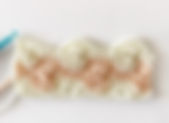
Ever wonder why certain crochet stitches are better for some patterns and not others? Does using a particular stitch really make a difference in the finished product? Even if you are not a crocheter, having a little bit of stitch knowledge can help you pick the best quality product. This year I want to find new stitches I haven't used yet. Come along with me as I explore new and fancy stitches and what projects they are best used for. Daisy or Star? Well my friends, it's both! It's like the famous optical illusion picture of the lady...do you see a duck or rabbit. This particular stitch is constructed by clustering stitches in a chain one space and skipping stitches from the previous row and when it's completed you have a field of daisies or stars...I call it the star stitch. Once you learn how to do the daisy/star stitch it pairs well with other stitches to make a visually pleasing and beautiful pattern. Written Instructions: Start with any ODD number. (To practice do at least 15.) Row 1 In the 2nd chain from the hook insert your hook and pull up a loop, insert and pull up a loop in the next chain. Skip (SK) the next chain, insert and pull up a loop in the next chain. YO and pull through all four loops on the hook. *Chain (CH) 1. Insert your hook into the hole the chain made and pull up a loop, insert and pull up a loop in the last chain you worked. SK the next stitch and pull up a loop in the next ST. Yarn over and pull through all the loops on your hook. Repeat from * to the end of the row. CH 3 and turn. (the first of those chain 3’s will be the one that closes up the daisy stitch.) Row 2 Insert and pull up a loop in the 2nd chain from the hook, insert and pull up a loop in the 3rd chain from the hook, SK next stitch, insert and pull up a loop in the hole that formed when you closed up the daisy in the row below. YO and pull through all loops on the hook. *CH 1, insert your hook into the hole the chain made and pull up a loop, insert and pull up a loop in the next hole, skip a ST and find the next hole and pull up a loop. YO and pull through all four loops on your hook. Repeat from * across to the end of the row. Video Instructions The video instructions are once again done by Daisy Farms. She is wonderful crafter and her videos are always easy to follow. The possibilities are as numerous as the stars... I don't think I have come across a stitch yet that you can't do one of the 3 with....blankets, dish clothes, or kitchen hot pads. Along with those 3 examples, here are a few more ideas that you can use this bright shiney stitch with including my own pattern for my "Starry Night" shawl. #bloggingthemoonCM #stitchofthemonth #simpledaisyandstars
- Stitches & Patterns...Harvest Stitch. Hot Pad Pattern Included.
Join me as I explore new and old stitches and create easy-to-follow patterns to add a touch of beauty and variety to any project you make. Harvest Stitch: Adding a Rustic Touch to Your Next Project What can I make with this rustic beauty? cowels sweaters/dress overlays blankets scarfs hot pads Imagination is always key in any worthwhile endeavor and we'd love to hear your creative uses for the Harvest stitch if you don't see them listed above. Scroll down to the comments and let us know! Video Instructions: By Deseret Blossom Crafts, posted 2 yrs ago Harvest Hot Pad This is such a quick, versatile stitch and you'll love how it looks. After watching the video instructions I recommend practicing a couple rows with it because practice makes perfect! PATTERN Disclaimer: In the pictures below of the featured hot pad is placed on a place mat but that is photo purposes only so you can see the details of the pattern. #bloggingthemoonCM #stitchesandpatterns #harveststitch
- Know Your Crochet...Crochet VS. Knitting
In need of a good DYI project or want to brush up on you crochet knowledge, well my dears, you have come to the right place. What's the Difference? While the finished results can appear similar, the two crafts have some differences, and you may find that you are better suited for the tools and techniques of one craft over the other. Like me, I find that trying to knit is like trying to walk, chew gum, and pat your stomach at the same time LOL! But, here I'll explain the pros and cons of knitting and crocheting along with the differences between the two crafts. I’ll talk about which option is easiest, and fastest as well as the types of patterns each craft creates. By the end you will find all the information you need to make a well-informed choice if you are looking to start a new hobby. Knitting and crocheting differ mainly in their techniques. In knitting, loops are formed by moving one needle to another using two long needles. A fabric is created by stacking rows on top of each other with stitches that are held onto the needle. The loops in crochet are formed directly onto the fabric using a single hook. Each loop is created one at a time, and it's more like knotting than stitching. Enter, the pros & cons Let's talk advantages 1. Knitted Fabric Makes Better Clothing This is probably the biggest advantage of knitting has over crochet. Knitting creates a soft, stretchy fabric that is tends to be more desirable when creating clothing and is a denser and finer. 2. There Are More Knitting Patterns Available Knitting offers more variety than crochet. You can find a knitting pattern for almost anything and you can even knit the same things you can crochet. More than just a wid variety, there are several different styles to choose from. 3. There Are Fewer Basic Knitting Stitches When it comes to knitting, you don't have to master many stitches or techniques like you do with crocheting. There are only two stitches you'll need to learn: knit and purl. and disadvantages... 1. Knitting Can Be Harder to Learn Knitting has fewer stitches, but it can be harder to learn for absolute beginners. Working with two needles can feel complicated at first, and it’s much easier for stitches to fall off knitting needles than crochet hooks. 2. Knitting Mistakes Are Difficult to Fix Even if you've been knitting for years, you'll still make mistakes. You might accidentally drop your stitches, use a the wrong technique at the wrong point in the pattern, or lose track of how many rows you've knitted. These mistakes can be hard to spot, and very frustrating to fix. 3. Knitting Is Slower Than Crochet Knitting is usually much slower than crocheting because knitting takes more stitches to create the same amount of fabric. You can knit a project with chunky yarn and large needles in a few hours, but finishing an adult-sized sweater using fine or medium-weight yarn can take several weeks. 4. You Can’t Use Knitting Needles for Two Projects Simultaneously This is more of an inconvenience than a disadvantage, but you can’t use the same pair of knitting needles for two projects simultaneously. Because you carry your loops on your knitting needle, you must finish your current project before using that pair of needles on another. However, but when you crochet you can start and stop as many projects as you want using the same size crochet hook. Tools Make the Person! Knitting always uses two needles to create stitches, while crochet always uses a single hook. Both the needles and hooks come in a variety of styles and sizes for convenience and comfort. Knitting needles come in three types: straight, circular, and double-pointed. Back-and-forth knitting is done with straight knitting needles. With circular and double-pointed needles, you can knit socks or sweaters in a tubular shape. For crochet hooks the design usually doesn't vary except when you do Tunisian Crochet and then you use a very long hook that looks like a knitting needle, but has the usual curved end. How you choose what hook you use depends on the size of your project and the type of comfort you need while crocheting. Below are examples of several different designs including what a Tunisian hook looks like. At the end of this blog are also a couple links on how to choose your crochet hook and other tools you'll need while crocheting. Other materials you would use for both crocheting and knitting is a tape measure, stitch markers, yarn, scissors, a pattern, and if you choose, a stitch counter. Best suited for.... Quick Side Note: Crochet can also create beautiful clothes, especially sweaters, shawls, hats, mittens, slippers, and baby clothes. To make your crochet more flexible like knitting you can either use a thinner yarn or a large hook and that adds a wonderful softness and flexibility to it. To Sum it Up Lastly, you'll benefit from dabbling in both crafts, regardless of the one you choose. As you can see from the differences outlined above, neither of them is objectively superior. You can make anything with either craft, including accessories, clothing, and decorations. So, there's no wrong decision when it comes to choosing between the two. #bloggingthemoonCM #knowyourcrochet #crochetvsknitting
- Stitch of the Month...Basketweave Stitch
Ever wonder why certain crochet stitches are better for some patterns and not others? Does using a particular stitch really make a difference in the finished product? Even if you are not a crocheter, having a little bit of stitch knowledge can help you pick the best quality product. This year I want to find new stitches I haven't used yet. Come along with me as I explore new and fancy stitches and what projects they are best used for. Weaving in the Fun! When I think of outstanding cozy patterns for fall, the Basketweave is the first to come to mind. It is a classic and timeless style that will keep you in fashion year after year. Crocheting the Basketweave stitch is not hard, but it does require knowledge on the anatomy of the Double Crochet stitch. The Double Crochet is a tall stitch that looks like a vertical fence post, and in fact that is what the middle of the stitch is called "a post". You do not go into the top of the stitch when you make a basketweave; you either insert your hook from the back of the post to the front, or from the front to the back. When you make a basketweave, you don't go into the top of the stitch; instead, you insert your hook from the back to the front or from the front to the back. The stitch will be wrapped around the post which makes the Double Crochet look like it is either in front of or behind, like an actual woven basket. You will work the pattern in rows. And once again thank you Daisy Farm Crafts for the easy to follow instructions and video! Written Instructions: Make a chain in multiples of 8 then add 4. In the 4th chain from the hook, (the chain 3 counts as first DC ) DC into each stitch across. Ch 3 and turn. FP DC (front post double crochet) around the next 4 DC ‘s. Then, BPDC (back post double crochet) around the next four. Alternate to the end. You should have one DC left (the turning chain) and in that one, do a regular DC into the top of the stitch. (Not around the post) chain 3 and turn. FPDC around the post of the next 4 DC , BPDC around the posts of the next 4 and repeat across. The last stitch will be a dc into the top of the turning chain. Repeat this two more times, or until you feel like a square is made. If you use chunky yarn two rows might be just fine. To make a new row of blocks that are the opposite, after the chain three and turn, start with a BPDC around the post of the next 4 stitches, then FPDC around the post of the next four stitches. The ends will always finish with one DC into the top of the turning chain. Mastering this technique gets you one step closer to understanding how cables are made. Try it out! And good luck. Here is a video clip of the basketweave stitch: Daisy Craft Farms Limitless Possibilities There really is no limit to what you can create with the Basketweave stitch...sweaters, scarves, gigantic blankets, baskets, purses, vests, pillows....so so much more! #bloggingthemoonCM #stitchofthemonth #basketweavestitch Check out The Crocheted Moons Fall/Winter Selection!
- CM Updates...Now Use Google Pay
Check this spot for new updates or changes to The Crocheted Moon or our products. New way to pay! With Google Pay, you can now pay for your purchases on The Crocheted Moon in 2 quick steps. After you have clicked on the cart icon and you're on the check out screen, you'll see a list of options to pay. At the bottom in white letters, click on "More Payment Options". Once you click on the link you'll see a button for GPay. Click on that and fill out all the necessary info to make your purchase. Easy, Peasy, Lemon Squeezy! Other accepted forms of payment #bloggingthemoonCM #CMupdates #googlepay
- CM Updates...A Good Referral is Worth a Thousand Words!
Check this spot for new updates or changes to The Crocheted Moon or our products. Spreading the News Fact, a referred customer is 18% more loyal than a customer acquired by other means. Referred customers are 4 times more likely to refer more customers and customers referred by other customers have a 37% higher customer retention rate. It all sounds great to me...but how does referring customers benefit you? Well, let me tell you. It's mostly about trust. Especially now days when a large amount of shopping is done online and not in person. If we love something we can't wait to share it with as many people as we can and we wouldn't send people we care about to places where they would be swindled, given poor product, or made to feel unhappy or unsafe. Your referrals create an atmosphere of trust, loyalty, and yes happiness for all. The more people you refer, the better I can make adjustments to The Crocheted Moon that allows me to keep offering fantastic customer service, perks for being loyal members, and to always offer high quality products you love. How do I help? It's simple, go to The Crocheted Moon's website, select more on the menu bar, go down to referrals, fill out and submit the referral page, and if you're already a member you earn 25 points towards rewards. If you're not a member yet, check out the type of rewards you can earn and then take a few seconds to join by clicking on the 'log in' icon on the menu bar. It will take you to the log in page where you can sign up. All your info is kept private and you can choose who sees it and who doesn't, kind of like Facebook. #bloggingthemoonCM #CMupdates #CMreferrals Referral Form Shortcut
- Stitch of the Month...Catherine's Wheel Stitch
Ever wonder why certain crochet stitches are better for some patterns and not others? Does using a particular stitch really make a difference in the finished product? Even if you are not a crocheter, having a little bit of stitch knowledge can help you pick the best quality product. This year I want to find new stitches I haven't used yet. Come along with me as I explore new and fancy stitches and what projects they are best used for. Feminine Circles The beautifully delicate pattern of Catherine's Wheel Stitch caught my eye as I was searching for new stitches to highlight. I just love the swirls that the alternating circles make and the fact you could do a whole project with this pattern or just use it as a decorative border. The crochet pattern is created using the Single and Double crochet stitch and while the execution of this pattern is an intermediate level, the stitches used are easy and basic. So, if you're still at a beginning skill level, don't shy away from a challenge, and if you're intermediate, to high then this a perfect pattern to add to your arsenal. How to Make Once again for the written instructions and illustrations I will be posting from my favorite fellow crocheter, Daisy Farms (daisyfarmcrafts.com/catherines-wheel-stitch). For her example she uses a medium weight yarn and a 5mm hook. Written Instructions: Start with 27 chains. Pattern repeat is 10 + 6 + 1. That means you can make a chain any multiple of 10, then add 6, then add one for the turning chain. Repeat rows 2-5 for the pattern to continue. And, change colors however you wish. Video Instructions Daisy Farms What to Make, What to Make.... Afghans, of course! I think you can make a blanket out any crochet stitch, but the Catherine's Wheel gives it a more delicate touch. You can also do wonderful shawls, scarves, or do it as a granny square and make coasters and hot pads. #bloggingthemoonCM #stitchofthemonth #catherineswheelstitch
- CM Updates...Searching Made Easier
Check this spot for new updates or changes to The Crocheted Moon or our products. New Search Bar Due to the growing number of items on The Crocheted Moon's website, I have added a search bar to make finding them easier. Easy Use So the one thing you don't have to search for is the 'search bar', I placed it in the sites grey header where you can always find it. Click the black rectangle and type in what you're searching for. For instance, if I wanted to look up all the cute little bee villagers of Honeycomb Hive and their super sweet home, I would type in 'honeycomb' (as shown in the second picture). Once I typed in my key word it would pull up a list of all the items being sold or blog posts that had that exact word in it. Different Ways to Search The search bar in the header is a great way to do a quick search, but if you want a more in depth search you can go to 'More' on the header tab, and select 'Search Results' from the drop down menu. When you're on the search page you can search under ALL (2nd pic) which will search all pages no matter the content. PRODUCTS (3rd pic) that allows you to get more specific in your search and even look under certain categories and price ranges. BLOG POSTS (4th pic) that will only search under published posts from "Blogging the Moon". And also OTHER PAGES (5th pic) which will search pages like 'About', 'Vendor Events', 'Deals & Discounts', 'Subscriptions', and so forth. With so many ways to search you're sure to find what you're looking for, but if not you can always chat with me through the message app (black square, lower left corner), email me thecrochetedmoon@gmail.com, contact me on Instagram @thecrochetedmoon456, or message me through facebook.com/thecrochetedmoon. I am at the ready to help find what you need! #bloggingthemoonCM #CMupdates #websitesearchbar